

Dynamo Series Stretcher | Baxter Puerto Rico

The Emergency Department
never stops.
Dynamo answers
the challenge.

Baxter comes to the AHPR Congress with the stretcher the ER never had.

Contact

Learn more about the Dynamo Series.

Share your contact information and a Baxter representative will reach out to tell you more about the Dynamo Series Stretcher and answer any questions.​

The challenge everyone recognizes

Traditional stretchers weren't built for today's ER. The Dynamo Series answers the challenge. Now available in Puerto Rico.

01

Every shift asks a lot of your team.

The same stretcher is moved again and again. The Dynamo Series was designed to make those transfers easier and help reduce the physical load of daily care. In 2023, Emergency Medicine reported the highest burnout levels among six medical specialties.

* Berg S, American Medical Association, 2024

02

Every fall has a real cost.

In U.S. hospitals, between 700,000 and 1,000,000 patients fall each year. The Dynamo Series was designed to help your emergency team see the risk before it happens. The average cost of a fall with injury is $62,521.

* Dykes PC et al., JAMA Health Forum, 2023

03

A better experience for your patient.

Patients don't remember every detail of their stay, but they do remember how it felt. The Dynamo Series was designed to provide greater comfort during the hours of waiting. Prolonged ER stays are an independent risk factor for pressure injuries.

* Han D et al., Int Wound J, 2020

Challenge 01 Answering the emergency team's challenges

Your emergency team moves patients all day. That has a real physical cost.

Every shift is dozens of transfers, adjustments and decisions. The shift doesn't change. The stretcher does.
46% fewer injuries among professionals using electric and powered-transport stretchers. [Pryce R et al., Am J Ind Med, 2024]
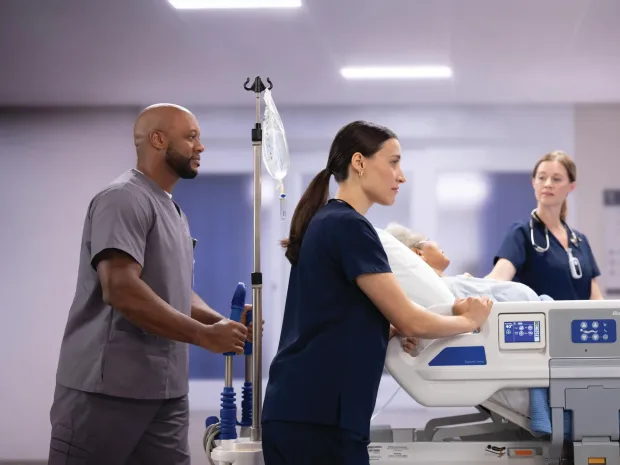
Transfer with greater comfort Moving a stretcher with a patient down a congested hallway, dozens of times a shift, can be demanding on the back and shoulders. And sometimes, extra help for a transfer is not available. IntelliDrive. Powered transport that helps reduce the effort of every transfer. Its frame is more compact than the stretcher you use today, and low-effort steering helps make every turn and every transfer easier.
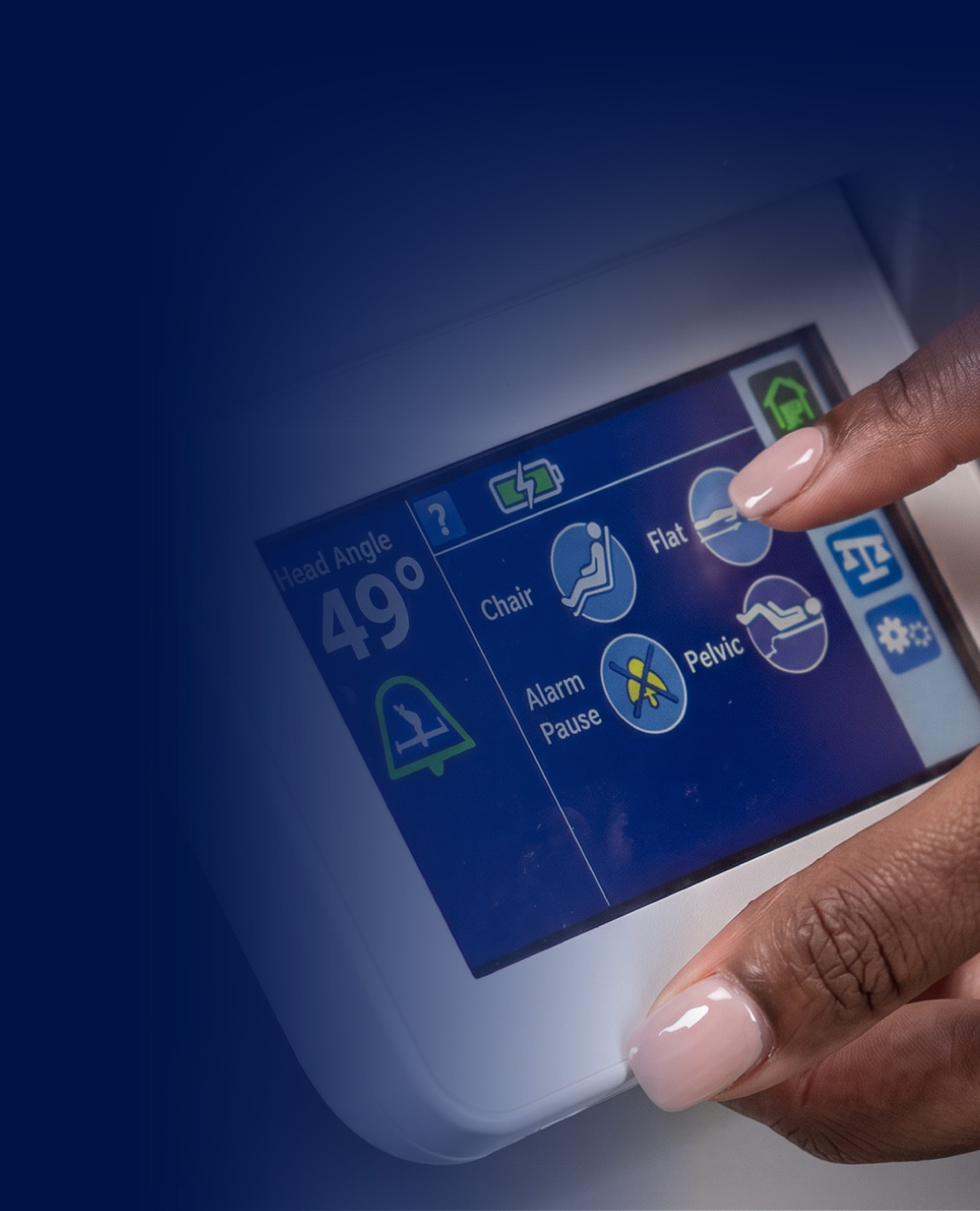
Adjust the patient's position Adjusting the patient's position usually requires several manual changes, and it is not always simple. In moments where every second matters, greater ease can make the difference. One-touch transition. From flat to full cardiac chair or exam mode, with fewer manual adjustments and in a simpler way.
Examine without extra transfers When everything needed is within reach, the patient can stay comfortable and the team can focus on what matters most: care. Integrated pelvic positioning, with no add-on accessories. The exam can happen where the patient is, even in tight spaces.
Change the stretcher height The right height can make every transfer more comfortable. For the patient, it eases getting on and off the stretcher. For your team, it helps them work more comfortably during care. That's why we included electric height adjustment, with a 19-inch minimum. The patient can rest their feet on the floor, and your team can work at a more comfortable height.
Ease adoption Onboarding new staff during a high-volume shift calls for tools that are easy to learn and use from day one. Intuitive control panel with built-in education modules. Designed to help staff become familiar with the stretcher in a simple, guided way.
See battery charge Having visibility of battery level helps every transfer continue with confidence, even during the busiest moments. Battery level is visible on the control panel and on SafeView+. Always within reach when you need it.
Challenge 02 Answering fall risk

In the ER, falls happen all the time. Your emergency team deserves to see them coming.

No one can be in two rooms at once. But you can see the risk from the doorway.

* SafeView+ not available on the base Dynamo model.

54% In one unit, a Centrella bed equipped with SafeView+ recorded a 54% reduction in total falls and 54% in falls with injury, in one year. Centrella bed data, not Dynamo stretcher data. [Parkhill SL, Radek J, Carle Foundation Hospital, 2024]
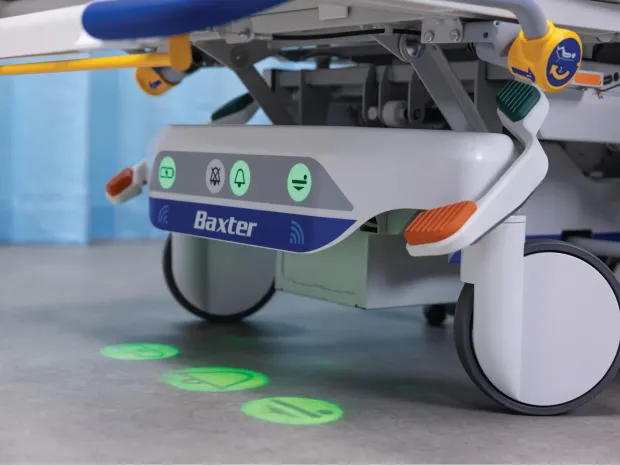
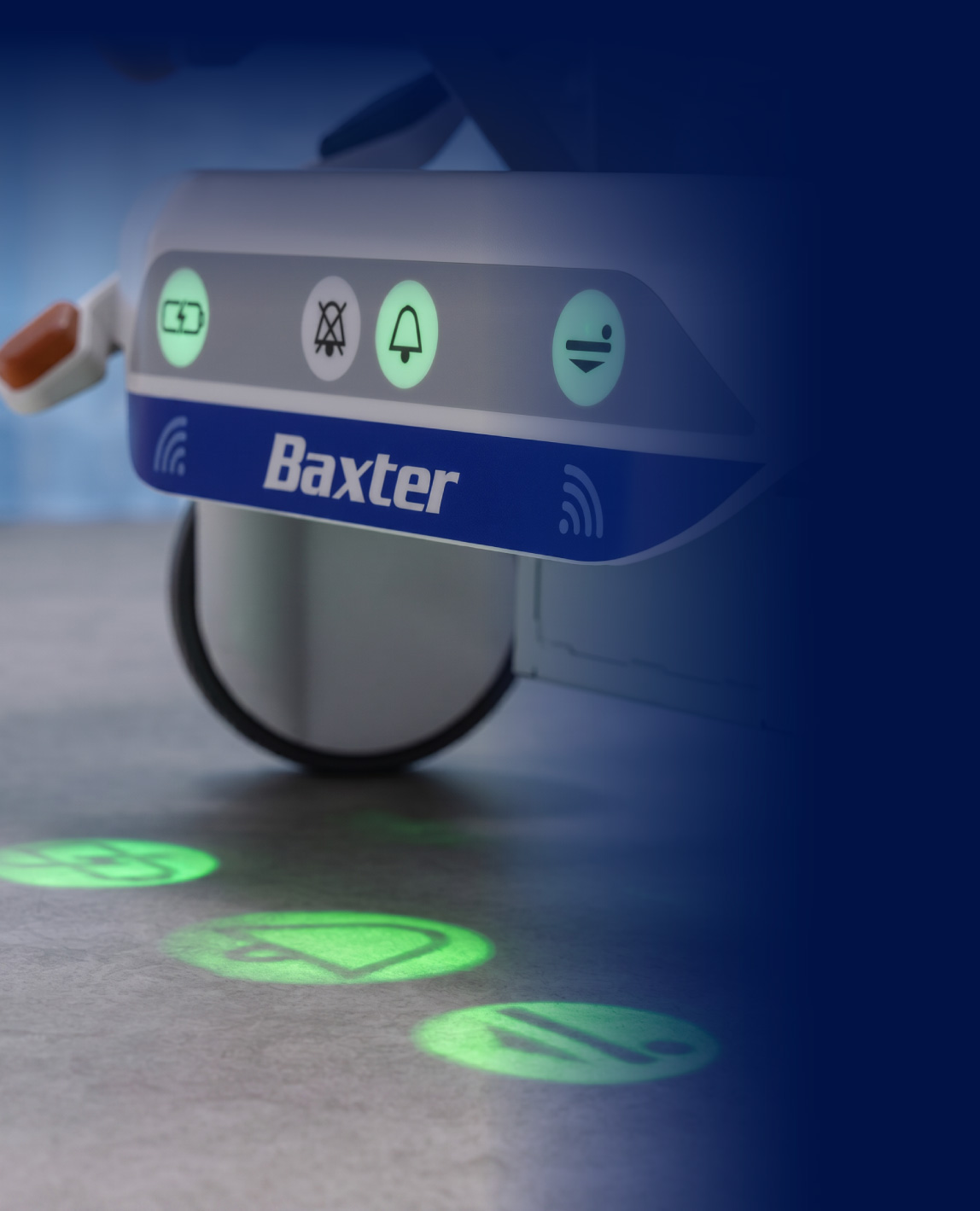
Read the stretcher from a distance Having information visible from a distance helps the team stay informed without disrupting the patient's environment. SafeView+. Light indicators that help you see battery level, alarm status and stretcher position at a glance, from anywhere in the room.
Choose the alert mode When a stretcher moves from one area to another, keeping the alert setting helps provide continuity of care and avoids reprogramming it on every transfer. Bed-exit system with three modes to choose from depending on the moment: · Silence · Auto-rearm · Verbal alert The selected setting is retained during transfers, helping maintain the alert mode intended for the patient.
Support the patient getting up Getting on and off a high stretcher takes effort and balance, and not every patient has both. A 19-inch minimum height, designed to help the patient lie down and get up more safely.
Shorten response time Care teams are present in many places at once. When a patient needs support, getting the notification quickly helps them respond with greater confidence. Bed-exit alert with reach beyond the room. It integrates with the nurse call system and the hallway light, so the notice follows your team wherever they are.
Challenge 03 Answering the patient's wait

When the stretcher becomes a bed, comfort stops being a luxury.

Narrower where you move it. Wider where your patient feels it.

5h ER nurses spend up to 5 hours a day caring for patients boarding for a bed. [Canellas MM et al., Ann Emerg Med, 2024]
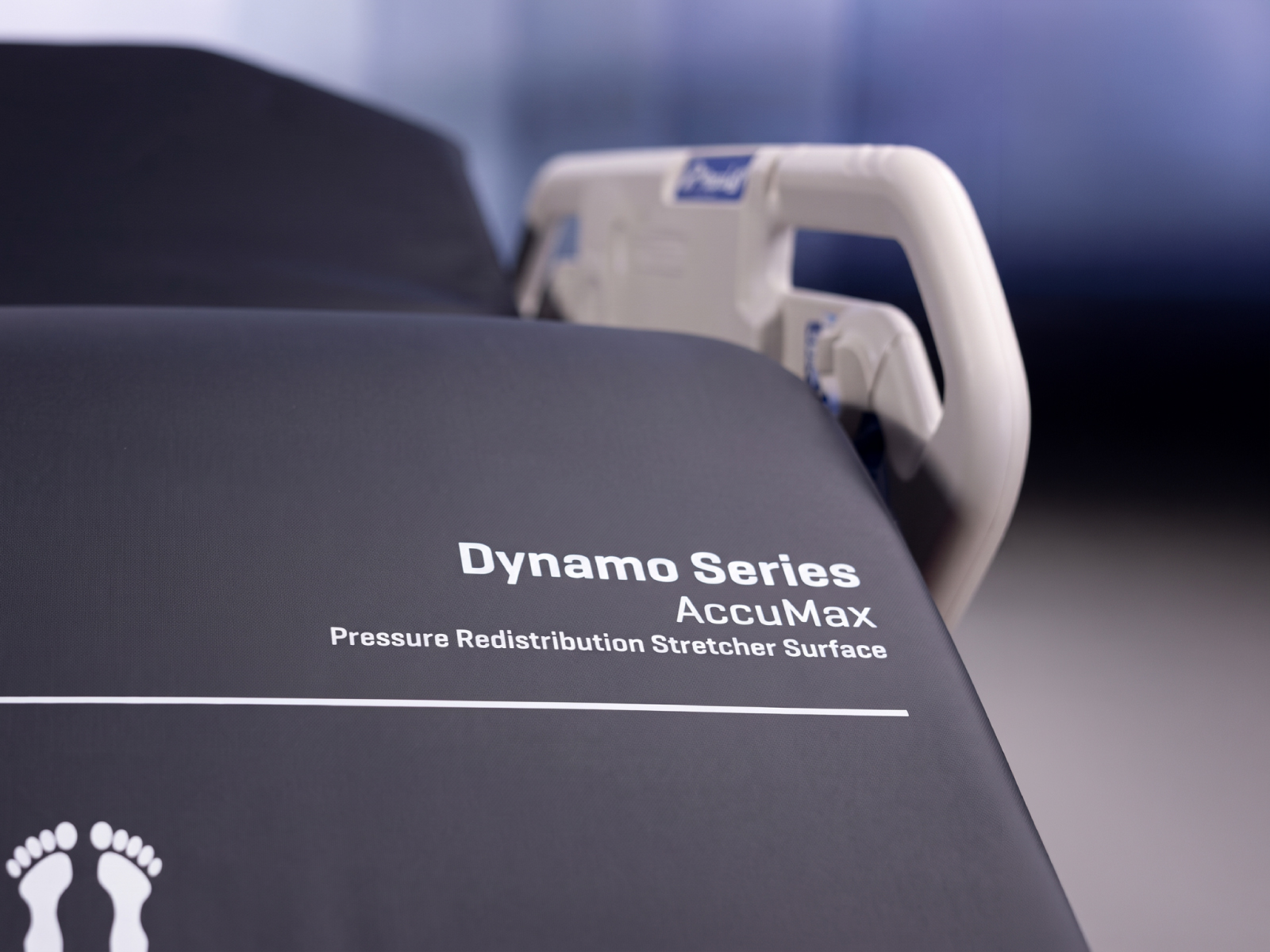
More comfort, less pressure The hours of waiting are also part of the patient's experience. A comfortable surface helps make that time easier to bear. AccuMax: a surface designed to provide greater comfort during prolonged stays. Its pressure-redistribution design helps care for the patient while they remain on the stretcher.
Simplifying the transfer Every transfer is an opportunity to give the patient comfort and confidence. Tools that make that process easier also help staff day to day. Siderails designed to reduce the gap during transfer, helping the transition between surfaces be more comfortable and fluid.
More autonomy, less waiting Small actions, like sitting up or shifting position, can help the patient feel more comfortable and more in control of their environment. Chair position with siderail controls. When the caregiver enables this option, the patient can adjust their position easily, supporting their autonomy and comfort.
Easier ways to stay connected During a prolonged wait, staying connected with family and loved ones can make the experience easier for the patient. Integrated USB port and device holder within the patient's reach. They help preserve the bond with those who matter most in moments that call for support.
What we learned by listening

Stretchers were designed to move patients. Today, in many Emergency Departments, they also accompany them for hours.

The Dynamo Series was designed with that reality in mind, alongside the clinical staff who live it every day.

01

What we heard 01

Patients can spend hours on the stretcher.

AccuMax helps keep those hours from leaving a pressure injury.

02

What we heard 02

Your team moves the same stretcher dozens of times each shift.

IntelliDrive helps keep that shift from ending in an injury.

03

What we heard 03

Falls happen in seconds. Preventing them isn't easy.

SafeView+ helps make the risk visible in time.

Designed for the toughest. Backed by Baxter.

Contact us
ES

LAM-CS420-260001